
Discover the Trust-Buster solution, step by step
Trust-Buster is an access-control system for your critical equipment, installed on your site and entirely in your hands. It answers the question that the software layer never reaches: who is authorised to use which equipment, where and when.
The pages below walk through a first complete process, the control of electrical outlets (see electrical IAM), from installation to log retrieval, on the demonstrator we use to test your own machines and intrusion scenarios with you.
These scenarios can also be replayed in the 3D scale model of the workshop, in six chapters written like the Cube's log: a normal day, an unexpected guest, inappropriate use, break-glass, badges and rights, then a night of outages.
The steps, one by one
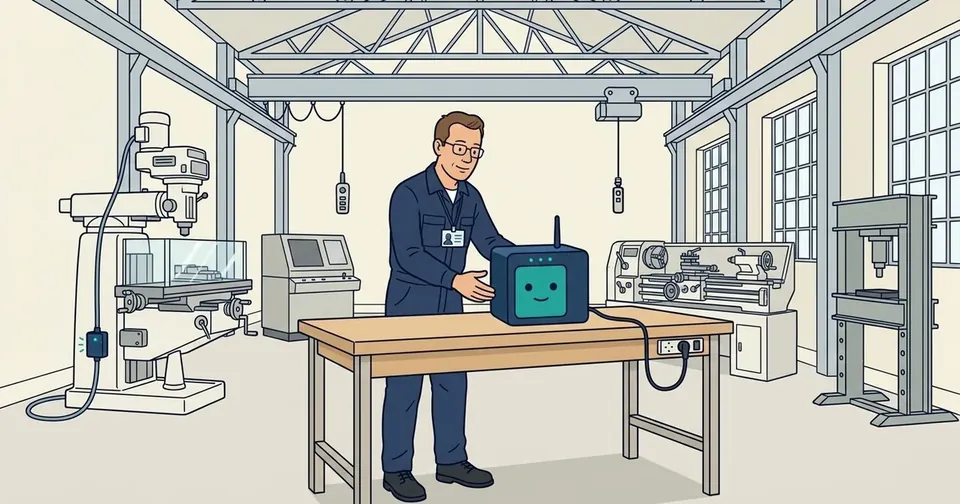
Phase 1: Installation & deployment
We deploy together: during the observation period, you keep control over how your rules are applied, as patterns of use are progressively learnt.
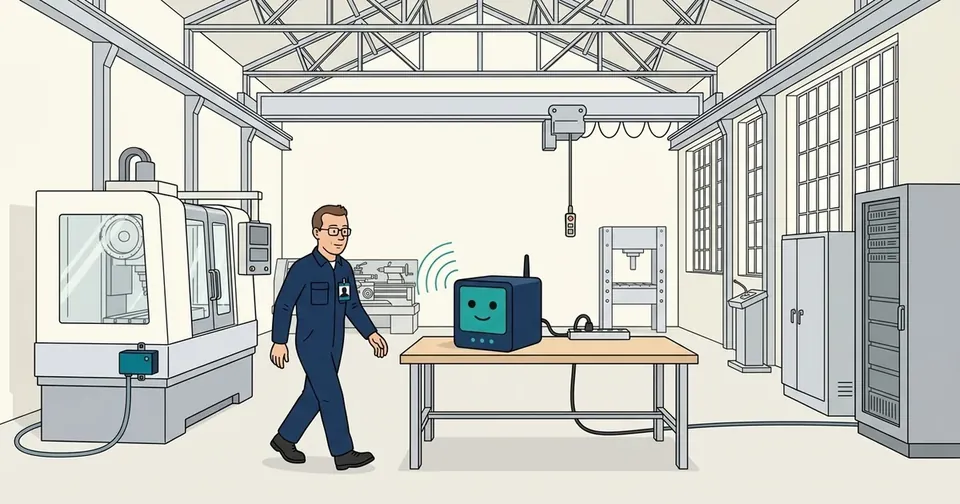
Phase 2: A normal day
Everyday access, silent and local: the right person, on the planned equipment, at the scheduled time, gets access with no cloud call and no waiting.
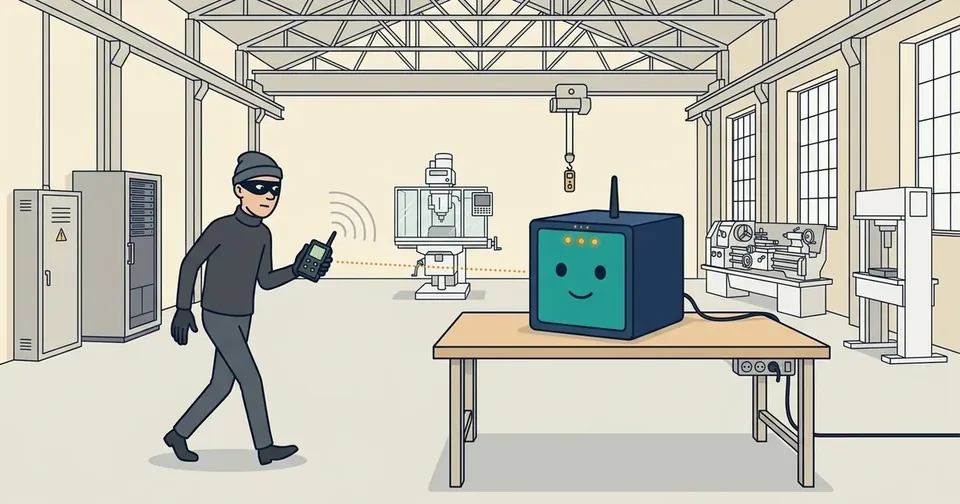
Phase 3: An unexpected guest (intrusion detection)
An unknown device appears in the perimeter: the Cube detects it, classifies it and reacts locally, before any attempt is even made to use equipment.
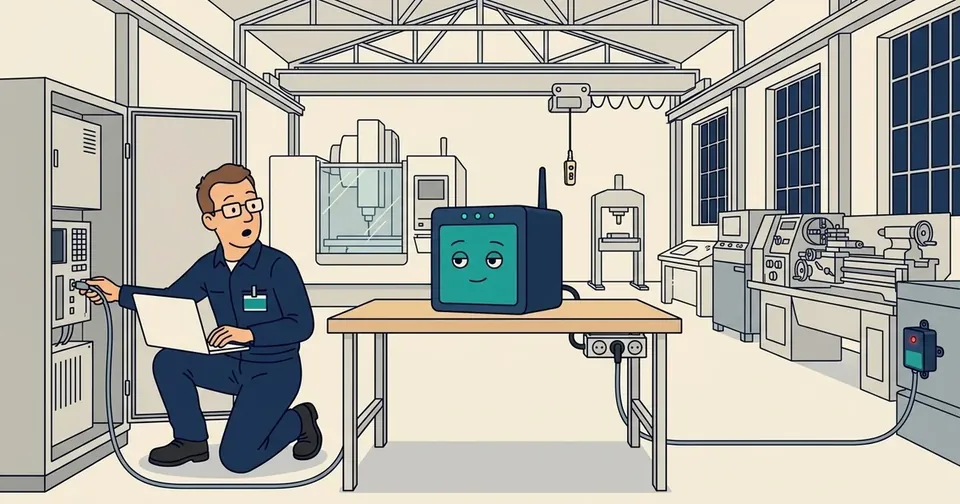
Phase 4: Inappropriate use (change detection)
When someone intervenes without authorisation, even with no detectable intrusion, the Cube spots the change in usage and records it in its log.
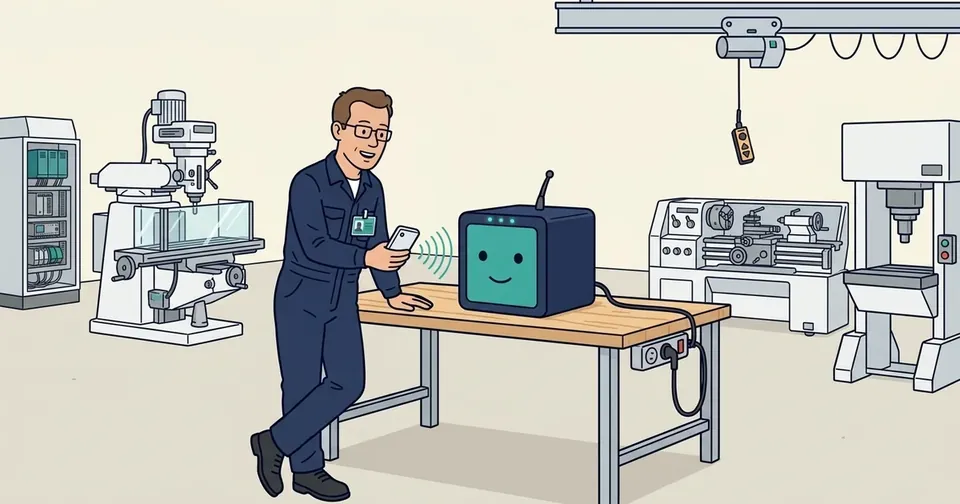
Phase 5: Log retrieval
An authorised user's mobile application retrieves the Cube's logs and forwards them securely to the centralised administration server.
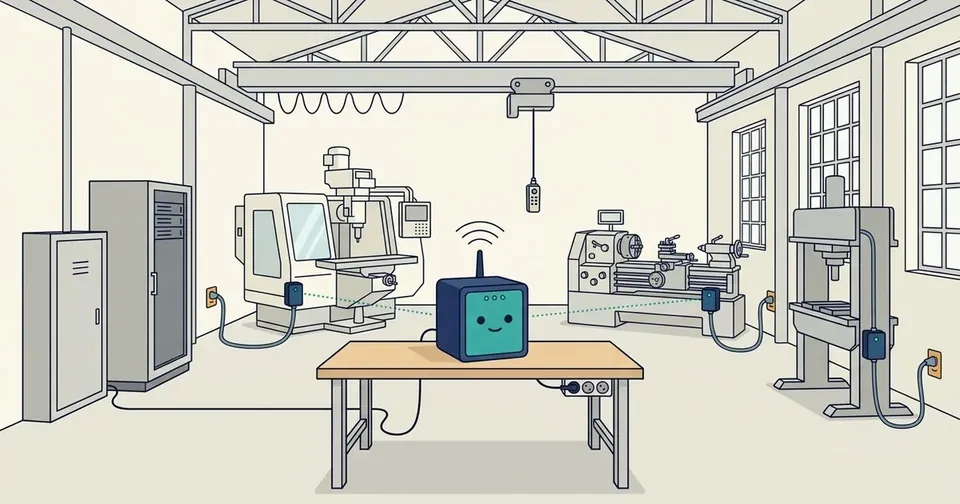
Appendix 1: Cube and satellites — a single anchor, several arms
The Cube decides and signs, each satellite enforces: one satellite per interface (power, serial link, USB), with no permanent authority whatsoever.
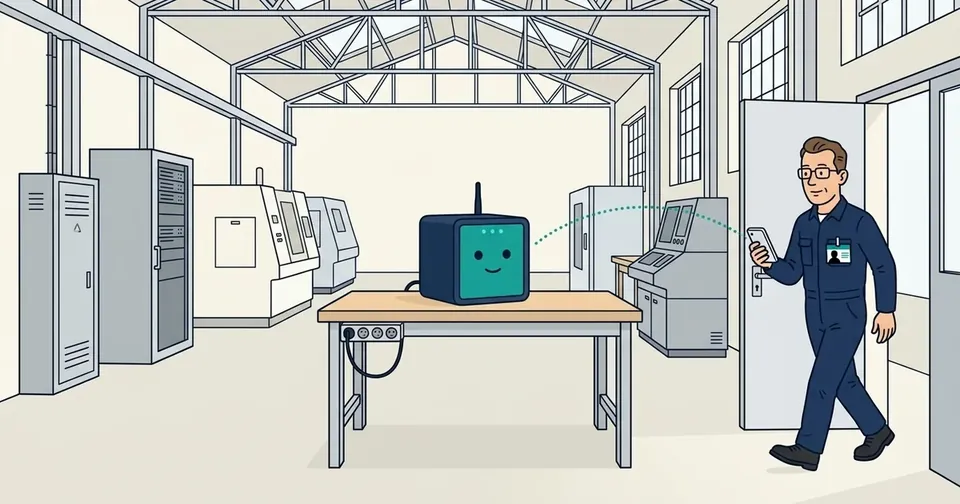
Appendix 2: network isolation (air gap) and synchronisation by mobile courier
The Cube never touches the cloud: on an isolated site, an authorised user's secured smartphone carries the log and the updates in and out.
What the effector covers today, and what it does not
The effector that is fully operational to date acts on a single-phase 230 V supply, as a controlled outlet or as a DIN-rail module on a cabinet feeder circuit. This covers a significant share of a workshop: test benches, tooling, shared workshop machines, 3D printers, laboratory equipment, IT racks, measuring instruments.
It does not, as things stand, cover equipment connected to a three-phase supply and permanently wired. On this type of machine, the point of enforcement moves to a dedicated cabinet feeder circuit, which implies work on the electrical installation, and therefore a study, a qualified electrician and an update of the installation file. We handle this case by case, and we do not sell it as an off-the-shelf product.
A point of vocabulary that matters. For us, cutting a power supply is a security control, not a safety function. It is no substitute for an emergency stop, a lockout procedure or a safety relay, and our device is neither assessed nor certified as such. The compliance of the machine and that of the installation remain the responsibility of their respective owners.