
Phase 3: An unexpected guest (intrusion detection)
Something that should not be there.
A device appears in the perimeter. The Cube detects it, classifies it and reacts — locally, before anyone even attempts to use a device.
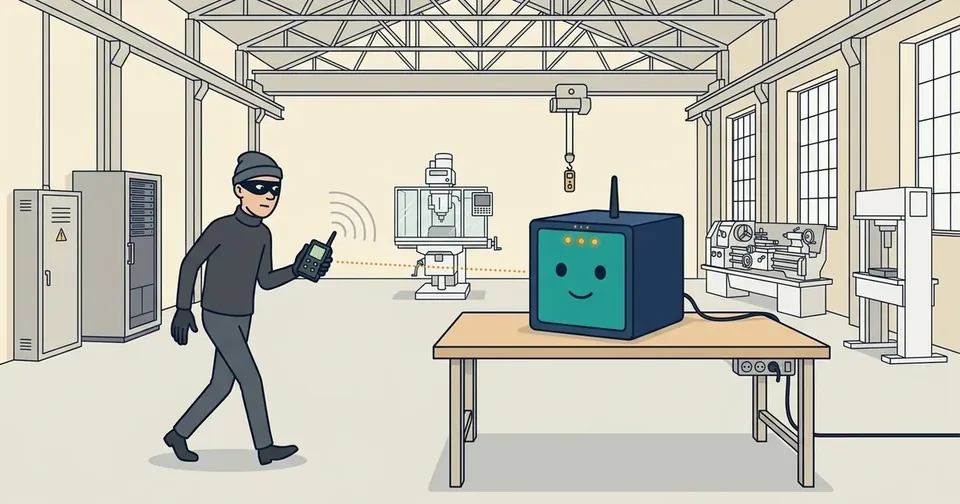
See this scenario in the 3D scale model of the workshop, replayed as the Cube logged it, from the first detection to the log line.
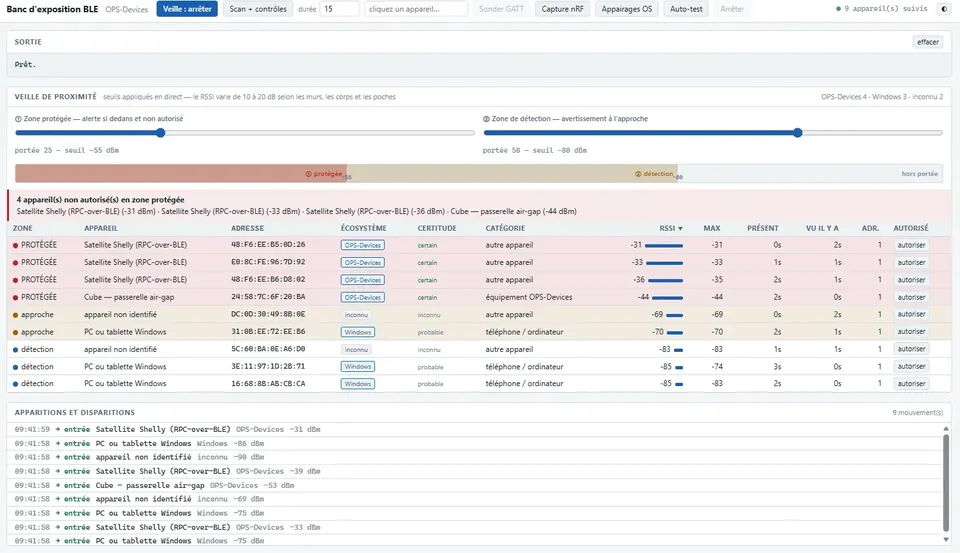
Since detection is a correlation and not absolute proof, an unknown emitter is treated as a signal. The Cube establishes its radio fingerprint (resistant to MAC address randomisation), flags it as unidentified and, depending on the more or less restrictive rules you have decided on, logs the event (observation), sends an alert for a decision (control), or restricts the zone and cuts power to the exposed equipment.
Known commercial tags (AirTag, SmartTag, Tile) are identified by name. But many devices are not, and they require generic rules. Every incident is signed and attributable.
In the app
Unknown devices stay amber as long as they keep their distance: a Bluetooth headset in the corridor or a courier's phone trigger nothing more than an observation line. When an unidentified device really gets close to the machines, its block turns red, moves to the top of the list, and a badge appears on the tab, so the alert does not get lost among normal activity.
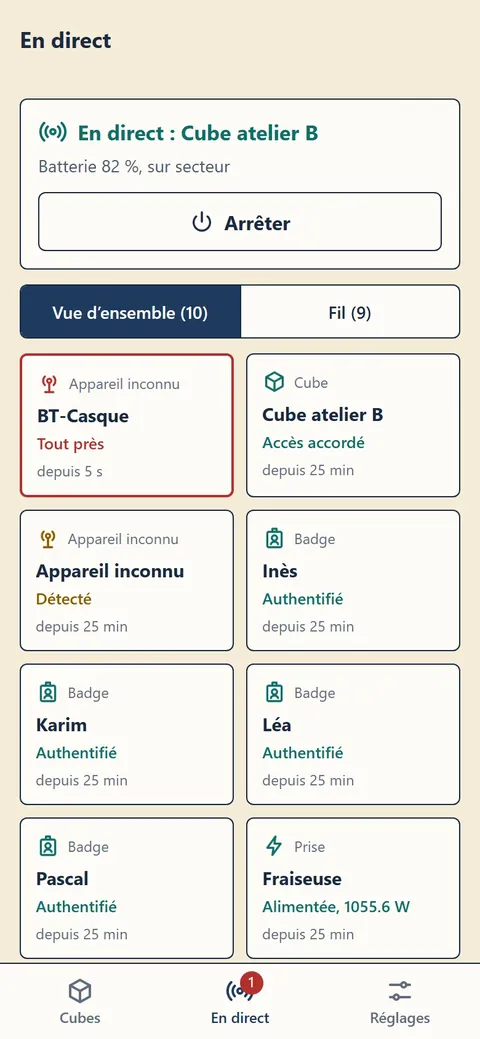
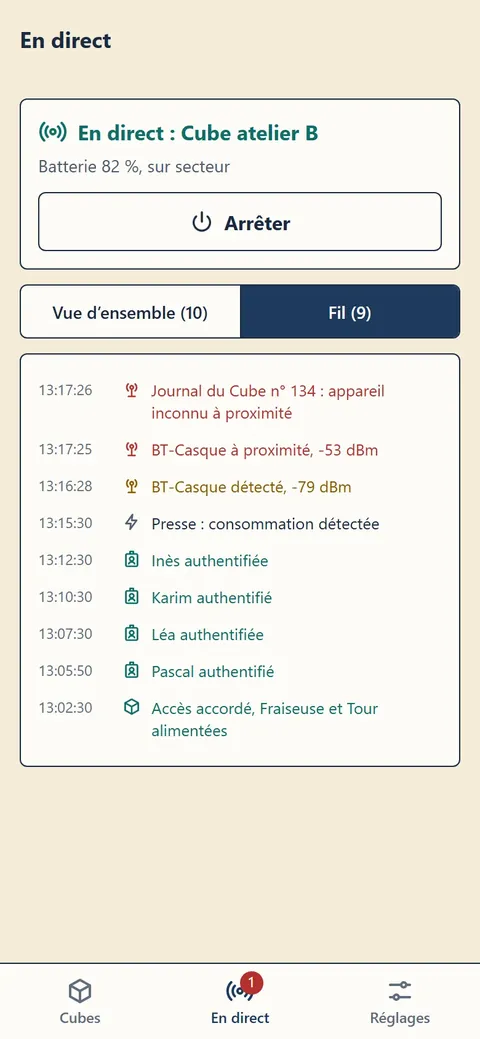
Screenshots taken in demonstration mode with fictitious data; the app interface is currently in French.
The alert is also written to the Cube's log, timestamped and chained to the previous entries: you can come back to it later, calmly, and decide whether it was an absent-minded visitor or something more serious.